
Winter Kayaking: How to Paddle Comfortably in Cold Conditions

For most people, kayaking is a summer sport. When the temperature drops, boats go into storage and paddles hang untouched until spring. But if you have ever gone kayaking in winter, you know how special it can be. Quiet water. Spectacular views. It’s just you, the boat and nature. Winter paddling can be incredibly rewarding – if you’re prepared.
This guide breaks down what you actually need for winter kayaking, based on real-world paddling—not theory.
Why Kayak in Winter at All?
Let’s be honest, paddling in the winter doesn’t sound exactly fun.
That said, there are some real upsides:
- You don’t lose your paddling skill in the winter.
- You build mental toughness.
- You can work on your technique and improve your physical condition.
For competitive paddlers especially, winter sessions often make or break the season later on.
Essential Winter Kayaking Gear
1. Pogies
Cold hands are usually the main reason to cut the session short. These NEO 1.5 K1 Pogies are a must for endurable winter sessions.
2. Boots (+ socks)
Cold feet drain energy and will power to paddle much faster than you would expect.
Make sure to:
- Wear neoprene boots.
- Wear socks inside the boots.
- Make sure the boots aren’t too tight, as air circulation is crucial for keeping feet warm.
Layering is very important for keeping the body warm. Also choosing paddling-specific clothing matters, as it is specifically designed to keep you comfortable while paddling.
Recommended paddling clothes:
- Shade V.4 L/S Shirt – Base layer, lightweight and keeps you dry from sweat.
- TEDDY Pullover – Warm mid layer, provides insulation.
- SYMBIO Pants – Great non-slip long sleeve pants. (Can pair with shorts if it is really cold)
Also, make sure to not overdress, as sweating in winter is a fast way to get sick.
Not wearing the right head and neck protection, you will lose a lot of heat.
Here are some suggested products to not let that happen:
- SLIM. 5 Balaclava – Keep the entire head and neck warm, without being hot.
- NEO 1.5 Cap – Slim fitting cap, will keep your head warm.
- TEDDY Neck Gaiter – Neck Gaiter / Beanie, designed for keeping your neck warm.
Make sure everything fits under your helmet, if using one.
5. Proper Drysuit, Jacket, Sprayskirt
When winter hits, keeping all of your clothes is absolutely crucial for a quality paddling session. The approach, however, differs depending on whether you’re a whitewater kayaker, a canoe slalom athlete, or a leisure paddler.
Whitewater Kayaking – a proper drysuit or jacket is absolutely necessary to not freeze to death. Suggested drysuit for men – ODIN Air4.X, for women – CALYPSO Air4.X W. If a drysuit is not necessarily needed for your paddling conditions, you should invest in a paddling jacket, like RAMBLE.
Canoe Slalom – no questions needed, SIROCCO is the go to for winter paddling. It has double wrist cuffs, snug-fitted neck cuff, durable and warm, yet light and breathable fabric, it is the best sprayskirt winter has ever seen. There are K1, C1, E1 and even BALLER 87 models available.
Leisure Paddling – usually a paddling jacket like RAMBLE should be perfect. It will keep water off your clothes. Need something a bit heftier? PALADIN Air4.X Dry Top would be for you.
Choosing the Right Day to Paddle
Winter kayaking won’t be enjoyable if you don’t:
- Pick days with light wind
- Use easy entry/exit points
- Paddle in familiar locations
Shorter sessions are better for the winter, do not try to “push it” in the winter, as that will usually lead to being cold and/or becoming sick.
Still not Convinced to Kayak in the Winter?
If cold water isn’t really your thing, don’t worry – you can still keep paddling somewhere warm. Training camp somewhere warm? That’d be perfect, but I meant you can keep paddling at your home, on a kayaking ergometer. The KayakPro XEON is the go-to kayaking ergometer.
With adjustable and close to realistic stroke feel, a kayaking ergometer will keep you on track – whether you’re a professional canoe slalom athlete or a kayaking enthusiast. Winter doesn’t have to mean a break from paddling.
Final Thoughts
Winter kayaking doesn’t have to suck. You just need to be prepared and patient.
When you have the right winter kayaking gear and make smart decisions, paddling through the cold can actually be enjoyable. It builds confidence, sharpens your technique and makes spring feel easy.
Respect the conditions – and have a wonderful winter paddling session.
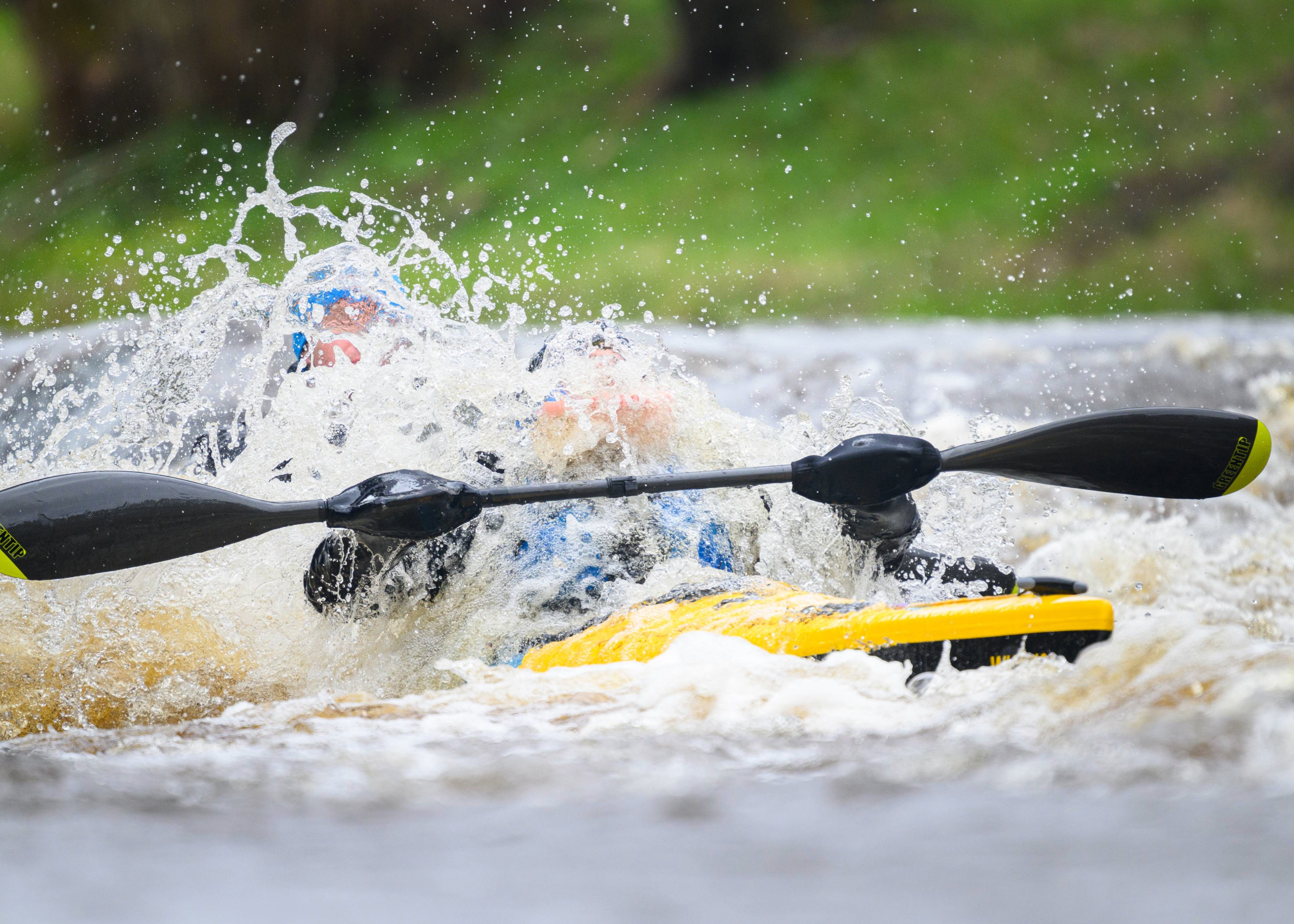
Photo: Sven ja Evalotta Zacek